Metro
Manufacturing Consulting in Houston, TX
Energy equipment capital of the world. Petrochemical infrastructure. Aerospace at Ellington and Johnson Space Center. The largest skilled-trades manufacturing labor pool in the country.
Houston is the energy-equipment manufacturing capital of the world and the floor culture reflects forty years of single-vertical depth. The petrochemical and oilfield-equipment plants here ship product no other regional cluster ships. The Sig Sauer pistol facility, the aerospace operations at Ellington, and the Johnson Space Center supplier base fill out the picture. Brass & Bench engagements in Houston are usually about energy-cycle repositioning, expansion into adjacent verticals, or the kind of operational rebuild that comes with private-equity ownership transitions.
Quick answer
Houston is the world capital of oilfield equipment manufacturing and the home of the U.S. petrochemical industry. The metro hosts Cameron International (subsea and surface drilling equipment, now under Schlumberger/SLB), National Oilwell Varco (drilling and production equipment headquarters), Halliburton, and Baker Hughes operations. The Houston ship channel and surrounding industrial corridor host one of the largest concentrations of petrochemical, refining, and chemicals manufacturing in the world. The Johnson Space Center and Ellington Field anchor a smaller but growing aerospace and defense manufacturing base. Brass & Bench engagements in Houston typically center on energy equipment manufacturer operational rigor, petrochemical plant Tier 1 and Tier 2 supplier program reviews, Acquisition Readiness for owners of specialty oilfield service or equipment companies, and Conformance Reality Checks ahead of API, ASME, or DCMA customer audits.
 By Mike Fox · Founding Partner. Business Development & Operations · Updated May 14, 2026
The manufacturing identity
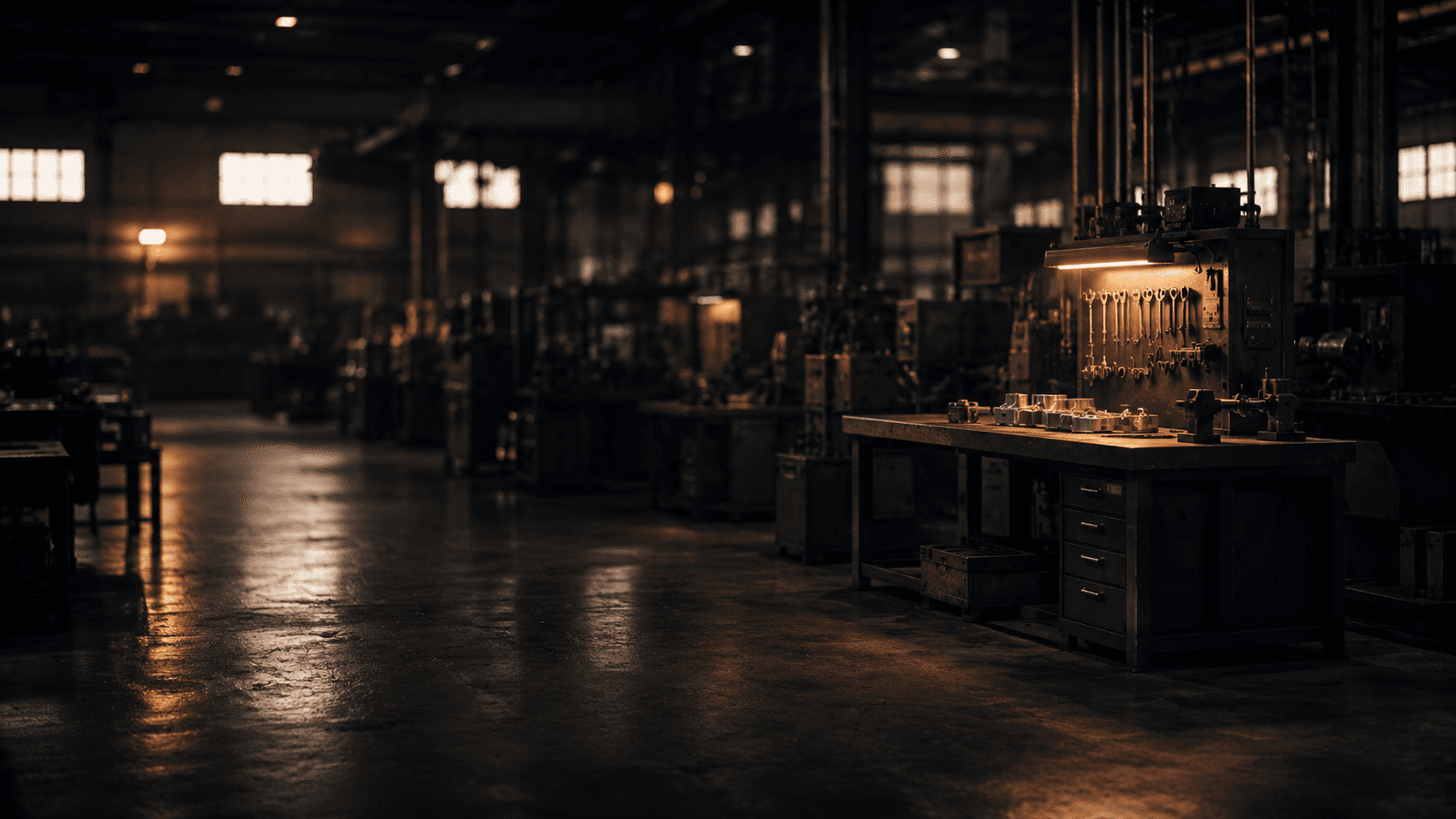
Manufacturing in Houston, TX.
Houston extends across Harris County and surrounding counties, with manufacturing concentrated in the east (Ship Channel, Pasadena, Baytown petrochemical corridor), the southwest (Sugar Land, Stafford Tier 2 manufacturing), and the northwest (Waller, Cypress, large industrial parks). The energy industry has anchored Houston's manufacturing identity since the early twentieth century, and the city's labor pool, supplier base, and customer concentration are all skewed toward oilfield, refining, and chemicals.
The regional supply chain extends across southeast Texas, into Louisiana (chemicals corridor), and across Texas Gulf Coast industrial corridor. Precision machining, large-scale fabrication, heat treatment, and pressure-vessel manufacturing capacity is among the deepest in the world. The labor pool draws from across the metro and across the broader Texas Gulf Coast.
Texas regulatory environment is among the most favorable in the country for manufacturers. Right-to-work state, no state income tax, and a Texas Workforce Commission training infrastructure that is among the strongest in the country.
How we work here
How we approach Houston, TX.
The team flies into George Bush Intercontinental (IAH) for primary access, or William P. Hobby (HOU) for Southwest Airlines connections. Hotel base depends on the specific corridor: properties around the Energy Corridor in west Houston for Cameron, NOV, and oilfield equipment work; Pasadena or Baytown properties for ship channel petrochemical work; Sugar Land properties for southwest manufacturing corridors. Ground transport requires deliberate planning. Houston is geographically large.
The kind of work we do in Houston tends to fall into four patterns: energy equipment manufacturer operational rigor (operations, demand cycle management, customer program reviews), petrochemical plant Tier 1 or Tier 2 supplier program reviews, Acquisition Readiness for owners of specialty oilfield service or equipment companies, and Conformance Reality Checks ahead of API, ASME, or DCMA customer audits.
Common patterns
What manufacturers in Houston, TX usually need.
- Energy demand cycle volatility. Oilfield equipment, oilfield service, and petrochemical plant Tier 1 supplier demand is tied to oil and gas prices. Production planning needs to anticipate cyclical pressure.
- Hurricane preparedness and business continuity. Houston Gulf Coast operations face hurricane exposure (Harvey 2017 was a defining event). Property and business interruption coverage, facility design, and operational continuity planning all need to reflect hurricane realities.
- Skilled-trades retention against energy industry pull. Houston-area manufacturers compete for skilled-trades labor against high-wage oilfield service positions. Compensation strategy needs to be deliberate.
- API, ASME, and pressure-vessel certification. Energy equipment manufacturers face deep regulatory and certification requirements. API monogram, ASME Section VIII pressure vessel code, NACE corrosion specifications, and customer-specific requirements all add to compliance burden.
- Workers' compensation classification accuracy in operations where job codes have drifted as the work has evolved.
- Property and casualty insurance pressure in operations with hurricane exposure or large industrial fire load.
Logistics
Travel + logistics for an onsite engagement.
Airports. George Bush Intercontinental (IAH) for primary access (United Airlines hub, dense direct schedule), William P. Hobby (HOU) for Southwest Airlines connections.
Hotel base. Houston Marriott Energy Corridor for west Houston, Hilton Galleria Area or Houstonian for inner-loop access, Sheraton Pasadena for ship channel work, Marriott Sugar Land for southwest corridor work.
Ground. Houston metro is geographically large, two hours edge to edge in good traffic. Rental car is required. METRO public transit is operationally irrelevant for an engagement.
Best windows for an onsite. Avoid June through September for severe heat and humidity (plus active hurricane season). Avoid late December through early January for holiday travel disruption. October through May is the cleanest engagement window.
Manufacturers in Houston, TX.
- Cameron International / Schlumberger (oilfield equipment)
- Halliburton (Energy Services HQ, Houston operations)
- Baker Hughes (Houston operations)
- National Oilwell Varco (Houston HQ, drilling and production equipment)
- SLB / Schlumberger (Houston operations)
- Daikin Industries (Waller, large HVAC plant)
- Boeing Spectrolab and broader Houston aerospace base
- Lockheed Martin Space (Houston JSC support)
Frequently asked
How long does an onsite engagement in Houston typically take?
The signature Two-Week Onsite engagement is ten working days on the floor for the assessment and design phases, with handoff on day ten. The team flies in on Sunday or Monday for the Monday start.
Do you work directly with the energy majors or oilfield service companies?
We work with both major manufacturers and mid-market suppliers in the regional supply chain. Specific client work is confidential unless ownership chooses to reference it publicly. The first conversation is always confidential and exploratory.
What state regulations should a Houston manufacturer be aware of?
Texas has one of the most favorable regulatory environments in the country for manufacturers. No state income tax. Right-to-work state. TCEQ air and water permits required for emissions sources above thresholds, with generally workable permit processes. Houston-area operations need deliberate attention to TCEQ Title V permits for petrochemical and chemicals operations.
How do you handle API and ASME certification work for energy equipment manufacturers?
The Conformance Reality Check engagement is built specifically for this work. API monogram programs, ASME Section VIII certification, and customer-specific energy industry requirements are routine engagement scope.
How do you handle hurricane preparedness and business continuity planning?
Property and casualty coverage review, business continuity planning, and supplier-base hurricane diversification are routine engagement scope for Houston Gulf Coast operations. Pam carries direct commercial insurance audit experience and leads the property and casualty review portion of an engagement.
What is the typical engagement structure for an acquisition-readiness conversation with a Houston energy equipment manufacturer?
The Two-Week Onsite engagement is almost always the first phase of an acquisition readiness path. For energy equipment companies, the engagement structure typically includes a demand-cycle exposure review alongside the standard operational assessment.
How does the regional labor cost compare to other industrial manufacturing hubs?
Houston wages are competitive against other Gulf Coast industrial hubs, lower than greater Boston or southern California for equivalent skilled-trades work, higher than rural Texas or southeastern hubs. The differentiator in Houston is the depth of operator-level skill in oilfield, petrochemical, and large-scale industrial manufacturing, which is genuinely unmatched globally for energy applications.